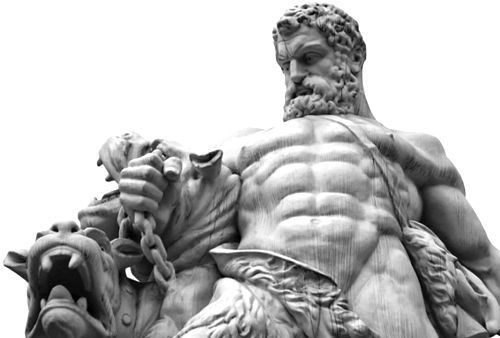
Before diving into the list of monsters, feats, and impossible journeys, we must clear up a doubt that has confused art and history lovers for centuries: Are we talking about Heracles or Hercules? The answer is simple yet revealing. Heracles is his original Greek name, which ironically means "Glory of Hera." Hercules is simply the Roman adaptation of the same hero.
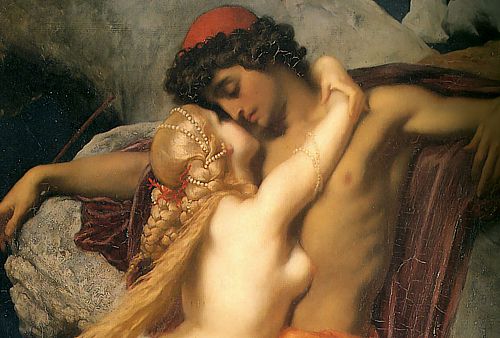
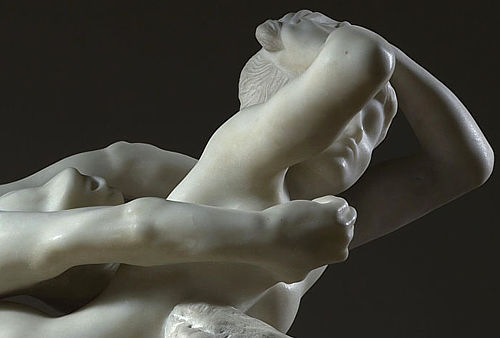
In the heart of the ocean, where the sunlight surrenders to the dominion of the deep blue, the young fisherman feels the cold, damp touch of the syren. Her fingers slide across his skin with a deceptive, almost electric softness, while he ignores the fatal destiny looming over his head. He is lost, absolutely hypnotized by the spell of eyes that do not belong to this world. Time seems to stop in an eternal sigh as she wraps him in one last embrace; her lips, so close to his, whisper promises of love and submerged kingdoms that will never be fulfilled. In that single, fatal moment, his humanity begins to dissolve into the absolute abyss.
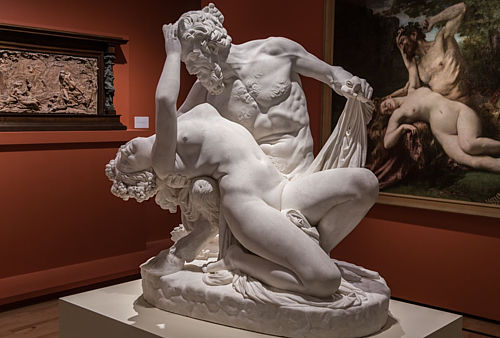
Within classical mythology, there are two figures that often inhabit the same shadowy forests and the same wild legends, yet we frequently confuse them as if they were the same being. We are talking about the faun and the satyr. Although both are closely linked to the cult of Dionysus, the god of wine and ecstasy, their origins and natures hide fundamental differences that define how art has portrayed them throughout the centuries. Today, we will explore these differences through one of the most controversial works in the history of sculpture: James Pradier’s Satyr and Bacchante.
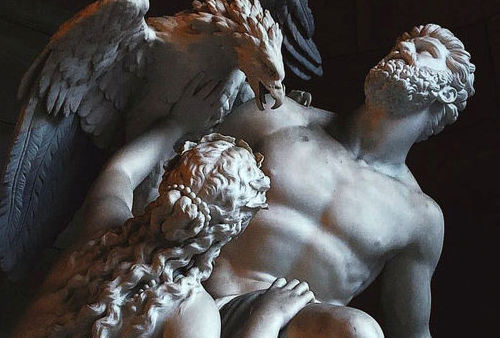
I speak to you from the threshold of Olympus, from that fuzzy boundary where the light of the gods meets the shadow of mortals. I am Prometheus, the Titan who refused to remain silent in the face of injustice, the rebel who chose eternal punishment rather than see humanity mired in servitude. Today, I want you to hear the truth about the fire I placed in your hands and, above all, why the gods of Olympus tremble at the simple glow of a torch in the night.
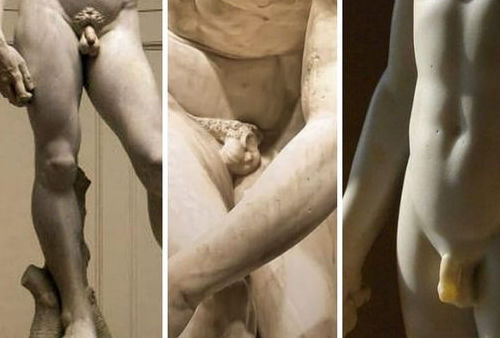
Size matters. This is a deeply rooted belief in modern times and contemporary culture, where physical vigor, overflowing virility, and power are often associated with magnitude. We live in an era of hyperbole, where big automatically translates to better. However, this concept was radically opposite for the ancient Greeks, the very people who laid the foundations of our civilization, our politics, and, of course, our concept of beauty. In classical Greek art, most traits of a great man —a hero, a titan, a god, a warrior— were represented as developed, firm, and harmonious, from their muscular torsos to their serene features. So, why weren't these same aesthetic principles applied to their genitals?
Zeus, the sovereign of Mount Olympus, the one who wields the thunderbolt and rules the sky, was the most powerful god, but also the most prolific. His insatiable appetite for love—whether with goddesses, nymphs, or mortal women—made him the father of a vast progeny. This is not a simple biographical detail; Zeus's offspring is, in essence, the structure upon which all mythology, theater, and art of Western civilization are based. Each of his children, whether Olympian gods or mortal heroes, represents a fundamental facet of human and divine existence.
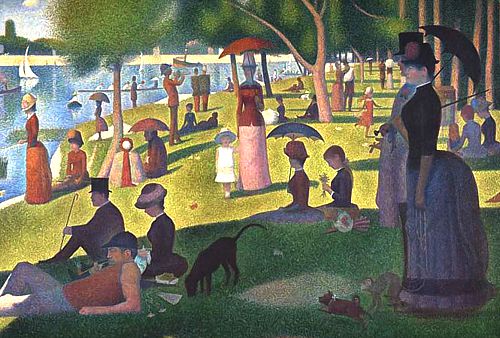
El puntillismo surgió en Francia a finales del siglo XIX, aproximadamente en la década de 1880, como una respuesta y una evolución al Impresionismo. Mientras los impresionistas buscaban capturar el...
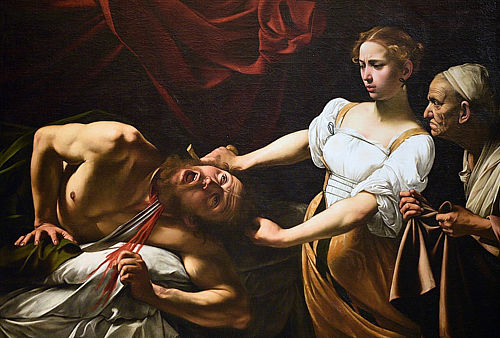
Mi nombre es Judith, y soy una mujer de la ciudad de Betulia, situada en la región de Judea. Nuestra ciudad estaba bajo la amenaza constante del ejército asirio, liderado por el temido general...
Desde tiempos antiguos, el hombre ha buscado en la música no solo un entretenimiento, sino un lenguaje secreto que conecta lo terrenal con lo divino. En el murmullo de una lira, en la vibración de...
En el oscuro abismo de la noche, donde las sombras bailan con la luz y el destino de la humanidad se decide en un suspiro, surge una obra que inmortaliza uno de los momentos más trascendentales de...
Desde las brumosas tierras de Tesalia, donde los ríos cantan su melodía eterna y las montañas se alzan majestuosas, nace una leyenda que desafiará el paso del tiempo. He sido testigo de muchas...
Charles Francis Fuller fue un destacado escultor británico no demasiado conocido. Se trasladó desde las Islas hasta Florencia para establecerse definitivamente y allí fue pupilo del escultor...
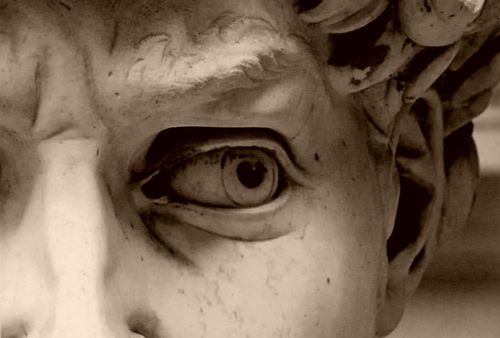
Esta casi de mas, comenzar diciendo que el David es la obra máxima de Michelangelo Buonarroti, es además una de las mas grandes esculturas de todos los tiempos. El David pronto se convirtió en el...
En su viaje a través del Infierno, Dante Alighieri, guiado por el poeta romano Virgilio, se adentró en las profundidades de los reinos infernales. Cada círculo del Infierno revelaba un nuevo y...
Sumérgete en un viaje emocionante donde la creatividad y la belleza artística se fusionan para dar vida a narraciones atemporales que siguen cautivando al mundo moderno. Desentrañamos los secretos ocultos detrás de estas obras icónicas y te llevamos en un recorrido único por la intersección entre mitología y genialidad artística.¡Déjate inspirar por la riqueza cultural que perdura a través de los siglos !